Türkiye Announces National Just Transition Strategy and Action Plan
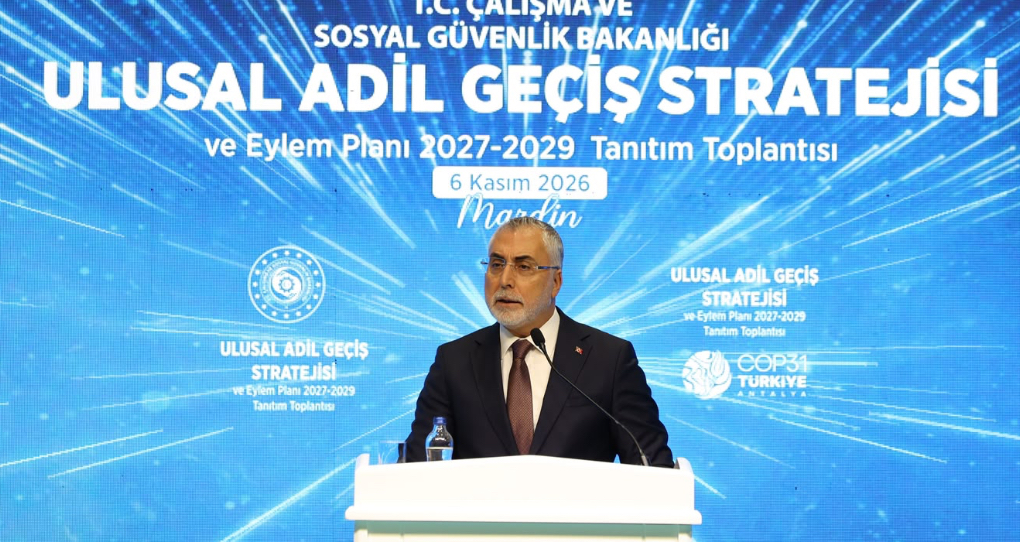
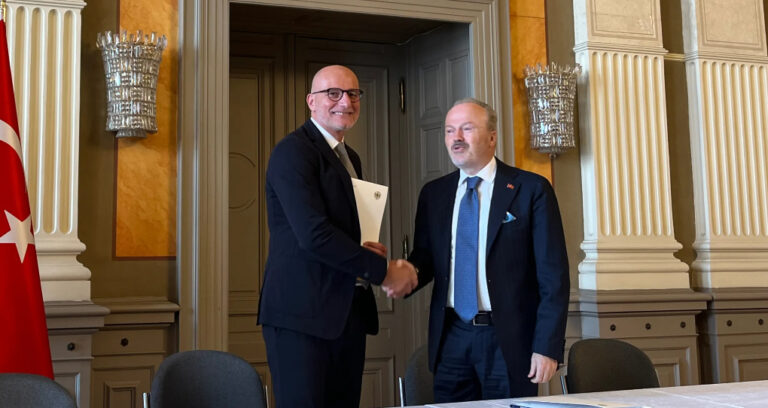
The National Just Transition Strategy and Action Plan, prepared under the coordination of the Ministry of Labor and Social Security, was announced by Minister Vedat Işıkhan at a launch event in Mardin.
Speaking at the event, Mr. Işıkhan said climate change, digitalization, artificial intelligence and new production technologies were reshaping almost every aspect of life, from economies and labor markets to daily life and international competition. He emphasized that while these changes offered significant opportunities for countries, they also brought new responsibilities and obligations.
Mr. Işıkhan said the strategy represented Türkiye’s comprehensive response, in line with its own circumstances, priorities and development goals, to questions about how the future of workers would be shaped, how young people would prepare for new occupations, how businesses would adapt to the transformation and, most importantly, how all segments of society would benefit from the opportunities created by these changes.
According to a summary booklet published by the ministry, the strategy was developed as a comprehensive policy approach addressing structural changes arising from climate change and the green and digital transitions, taking into account employment, income, working conditions, skills, social protection, health, regional development and social inclusion.
17 Priority Sectors Identified
The preparation process began with the first meeting of the Just Transition Policies Specialized Working Group (AGEP) on June 16, 2022. It involved more than 1,000 stakeholders and covered 17 sectors and 33 thematic areas.
The criteria used to identify sectors for the just transition included their exposure to the green and digital transitions, the impact of international regulations, particularly the European Union’s Carbon Border Adjustment Mechanism (CBAM), employment structures and potential for transformation.
Five of the 17 sectors identified under these criteria are linked to the EU’s CBAM: steel, aluminum, energy, cement and fertilizer.
The remaining 12 sectors are chemicals and plastics, mining (critical and strategic minerals), recycling and waste, textiles and apparel, automotive, information and communication technologies, defense, agriculture, tourism, retail, construction, and finance and insurance.
According to the document, the effects of the transition are expected to emerge primarily through changes in skills, adaptation requirements and job responsibilities rather than job losses. Accordingly, measures will be designed to address the specific needs of individual sectors and regions rather than adopting a uniform approach.
The planned measures include:
- Developing a Just Transition Social Risk Map.
- Introducing proactive measures for occupations highly exposed to artificial intelligence.
- Updating Vocational Training Center (MESEM) curricula to incorporate green and digital skills.
- Developing micro-credentials in green and digital transformation fields by 2028.
- Expanding women’s access to vocational qualification certification.
- Developing social security models for new forms of work.
- Establishing a Türkiye-specific list of climate-sensitive diseases.
- Establishing provincial just transition advisory boards in four pilot sectors.
- Providing financing for the just transition through secondary regulations under the Climate Law.
The plan will be monitored twice a year using quantitative performance indicators through the Ministry of Labor and Social Security’s Action Plan Monitoring System. Reports will be reviewed at meetings chaired by the deputy minister and published on the ministry’s website. The Action Plan may also be revised at the end of each year.
Ten percent of the revenue collected under the Climate Law will be allocated to these activities. National resources, international climate and development financing, and private sector funding will also be used in a complementary manner.
The published summary document makes no direct reference to coal mining or coal-fired electricity generation.
However, the Türkiye Critical and Strategic Minerals Report, published by the Ministry of Energy and Natural Resources earlier this year, classified coal among the critical minerals covered by the strategy.