H2DER and H2Global to Cooperate on Green Hydrogen
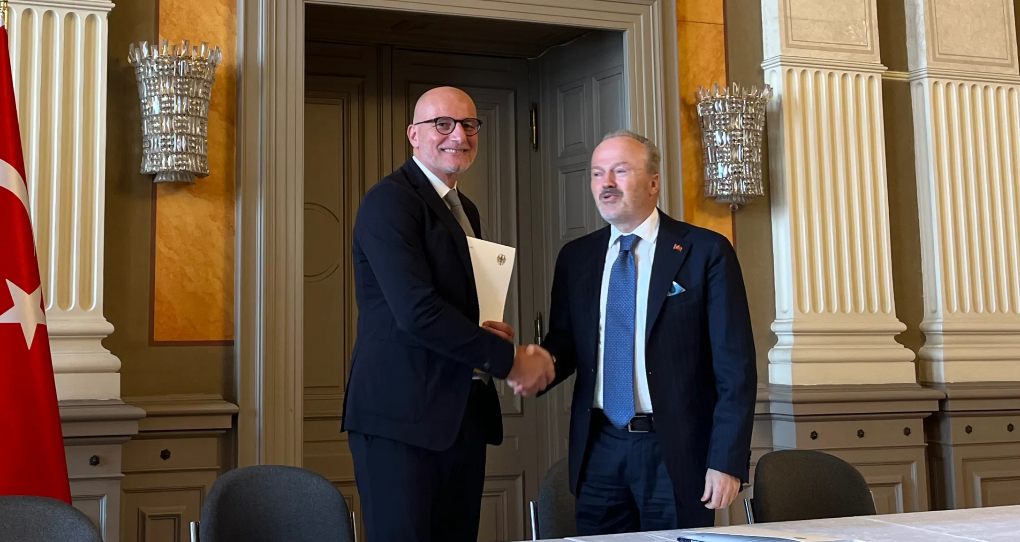
The Green Hydrogen Producers Association (H2DER) and Germany’s H2Global Foundation have signed a memorandum of understanding aimed at producing green hydrogen in Türkiye and supplying it to the European market.
The agreement was signed by Yusuf Günay, president of H2DER, and Markus Exenberger, executive director of the H2Global Foundation, during an event titled “Hydrogen Economy in Türkiye: Foundations, Opportunities and Challenges,” held at the German Consulate General in Istanbul on Oct. 12, 2026.
In his presentation at the event, Mr. Exenberger said Türkiye had more favorable conditions for green hydrogen and Power-to-X (PtX) technologies than other countries. He cited its advantageous geographical location, wide range of renewable energy resources, close economic ties with the European Union and Germany, its position as a strategic and reliable partner as a NATO member, high level of industrialization and skilled workforce.
Discussing the results of an analysis conducted specifically for Türkiye, Mr. Exenberger said it would be possible to install a total of 2,387 Megawatt-hours of electrolyzer capacity powered entirely by renewable energy sources in İzmir, Bandırma, Rize and Mersin. He added that this capacity could enable hydrogen production at a cost of €0.05, based on 8,000 operating hours a year.
Speaking at the opening of the event, H2DER President Yusuf Günay said the cooperation aimed to transform Türkiye’s clean energy and green hydrogen potential into commercial opportunities that would benefit both Türkiye and Germany.
Mr. Günay recalled that Türkiye published its Hydrogen Technologies Strategy and Roadmap in 2023. The strategy sets targets of two Gigawatts of electrolyzer capacity by 2030, five Gigawatts by 2035 and 70 Gigawatts by 2053, while aiming to reduce the cost of green hydrogen production to below $2.40 per Kilogram by 2035.
Mr. Günay also emphasized the importance of expanding cooperation between Türkiye and Germany beyond green hydrogen, saying it could include the production of hydrogen-based products such as green ammonia, e-methanol and other derivatives.
He noted that these products could be produced and used in both countries through joint investments and technology development, helping to reduce carbon emissions in both countries.
Mr. Günay highlighted the potential applications of green hydrogen in iron and steel production and the chemical industry, green ammonia in fertilizer production, and e-methanol in maritime transportation.
He also stressed the need for a clear and predictable regulatory framework and harmonized certification systems to develop a sustainable and commercially viable hydrogen sector in Türkiye.
Mr. Günay added that the sector’s development would require easier access to competitively priced renewable electricity and stronger investment support. He also called for consideration of long-term purchase agreements and other procurement models, as well as industrial demand in infrastructure planning.