Turkish Steel Exporters’ Association Signs Cooperation Agreement on CBAM Regulations

The Turkish Steel Exporters’ Association (ÇİB) announced that it had signed a declaration of cooperation with CARES (Certification Authority for Reinforcing Steels), an independent international certification and verification body serving the steel and construction industries, in connection with the European Union’s and Britain’s Carbon Border Adjustment Mechanism (CBAM) regulations.
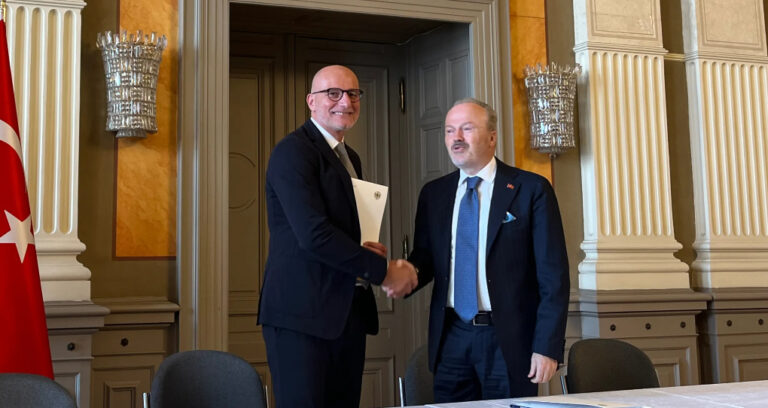
According to a statement from the association, the declaration aims to raise awareness of the EU and British CBAM requirements within Türkiye’s steel industry, prepare exporters for the new regulations and improve companies’ access to technical information. The declaration was signed by Uğur Dalbeler, chairman of ÇİB, and Ayhan Tuğrul, chief operating officer of CARES.
The cooperation aims to inform ÇİB member companies about the requirements, implementation schedules and verification procedures associated with the EU and British CBAM regulations.
Under the declaration, the two organizations will hold joint information sessions, webinars and workshops for ÇİB members and share general, noncommercial information about CBAM regulations. The agreement also provides for regular exchanges of information between the two organizations on international developments that could affect Türkiye’s steel exports.
The initiative is intended to help exporters closely monitor regulatory changes and verification requirements.
The cooperation between ÇİB and CARES is expected not only to improve Turkish steel exporters’ understanding of these procedures but also to help companies anticipate verification requirements and make the necessary preparations in a timely manner.
CARES will provide technical content support, while the two organizations will regularly exchange information on CBAM requirements, implementation schedules, preparations for verification and industry developments affecting Turkish steel exporters.
CARES will continue to conduct its verification activities independently and impartially, in accordance with ISO/IEC 17029 and ISO 14064-3 standards. The cooperation will not affect the scope, depth or outcomes of verification procedures in any way.