
Electrification to Be at the Center of Türkiye’s New National Energy Plan
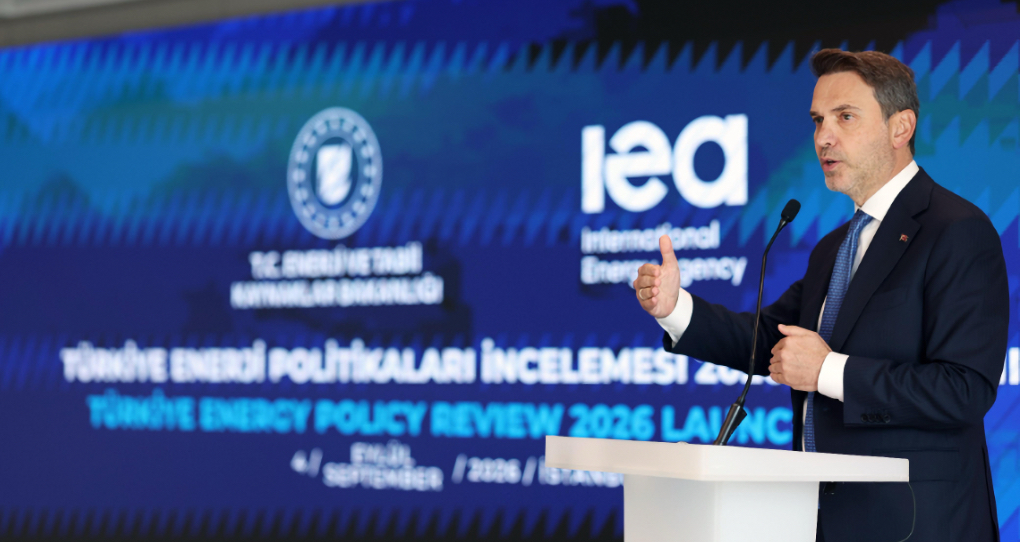
Türkiye is preparing a new energy strategy centered on expanding electrification, Energy and Natural Resources Minister Alparslan Bayraktar said at an event marking the release of the International Energy Agency’s review of the country’s energy policies.
Speaking at the launch of the “Türkiye Energy Policy Review,” Bayraktar said 2026 was a scheduled review year for the Türkiye National Energy Plan and that the government was carrying out extensive work on a new framework.
Türkiye aims to present the plan internationally as its new energy architecture through 2040 ahead of COP31, he said.
Bayraktar said Türkiye’s energy policy is shaped by three principal challenges: rising demand, dependence on external energy supplies and decarbonization. The country’s new energy framework, he said, will be built around increased electrification.
Transportation, growing demand for cooling and the need for water desalination are expected to be among the main forces driving that shift, he said.
Less than 1 percent of Türkiye’s transportation sector is currently electrified, according to Bayraktar. The government expects there to be between 8 million and 10 million electric vehicles on Türkiye’s roads by 2035, a development that would substantially increase electricity demand.
Bayraktar also pointed to the country’s rapidly growing cooling needs. Demand in that area rose by about 20 percent in 2025, he said, adding that the ministry expects similarly strong growth in the years ahead.
That trend is placing pressure not only on electricity generation but also on the power grid, he said.
The ministry also expects demand for seawater desalination to rise in Türkiye and the surrounding region. Bayraktar said desalination alone could generate about 4 terawatt-hours of annual electricity demand by the 2035-2040 period.
Integrating new renewable-energy capacity and nuclear power plants into Türkiye’s electricity system will require about $80 billion in investment by 2035, Bayraktar said.
He added that Türkiye was in discussions with other countries over regional cooperation in electricity transmission and aimed to expand both the number and capacity of interconnection lines with neighboring countries.
Changing weather patterns associated with climate change, he said, are also making it necessary for Türkiye to redesign parts of its electricity transmission network.